

Howdy, folks!
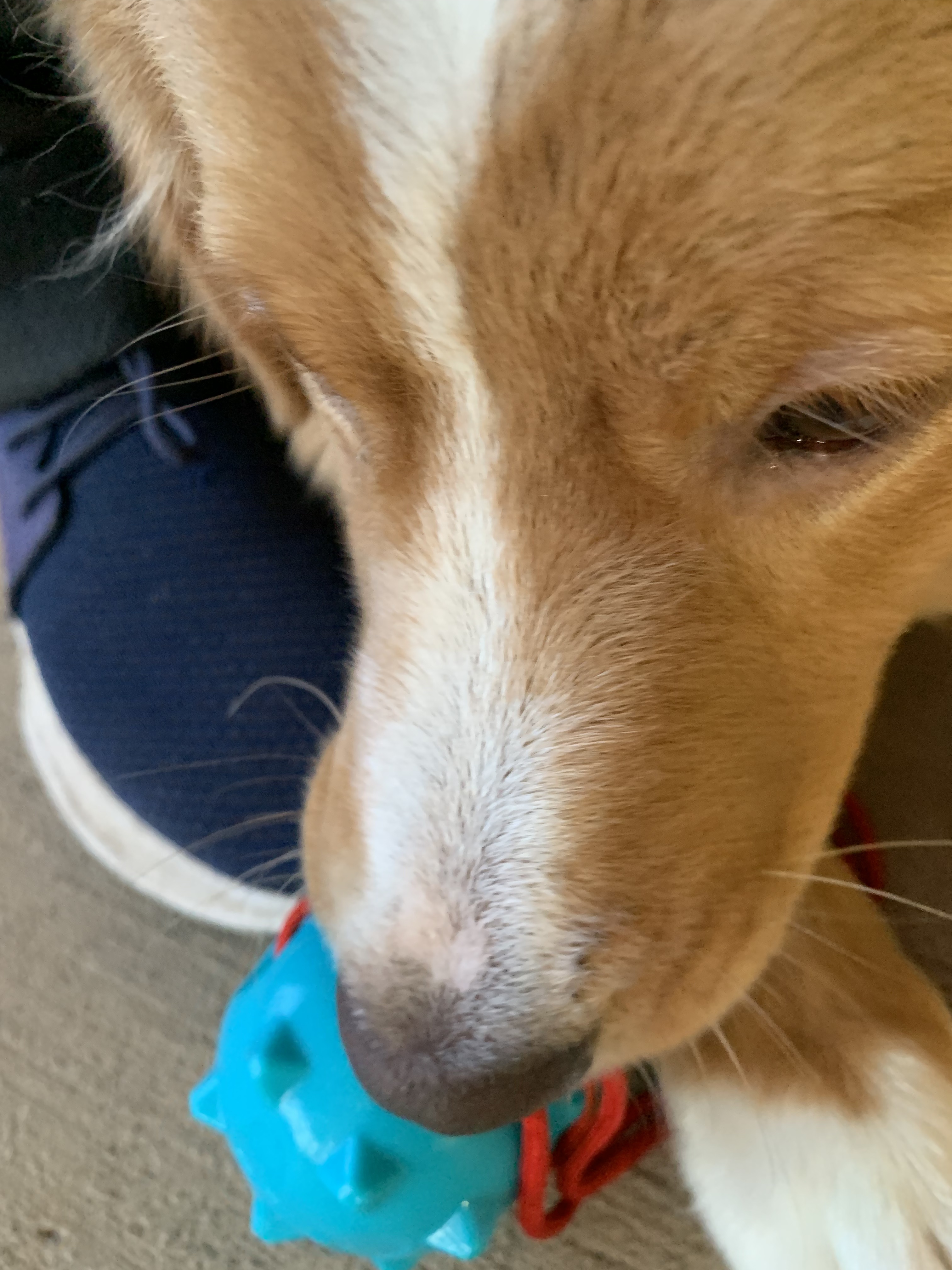
This is the face of a guy who was visited by the adolescence fairy for realsies this week. Boy are we in it now, and it’s going to be a while before we come out the other side. Wish us luck!
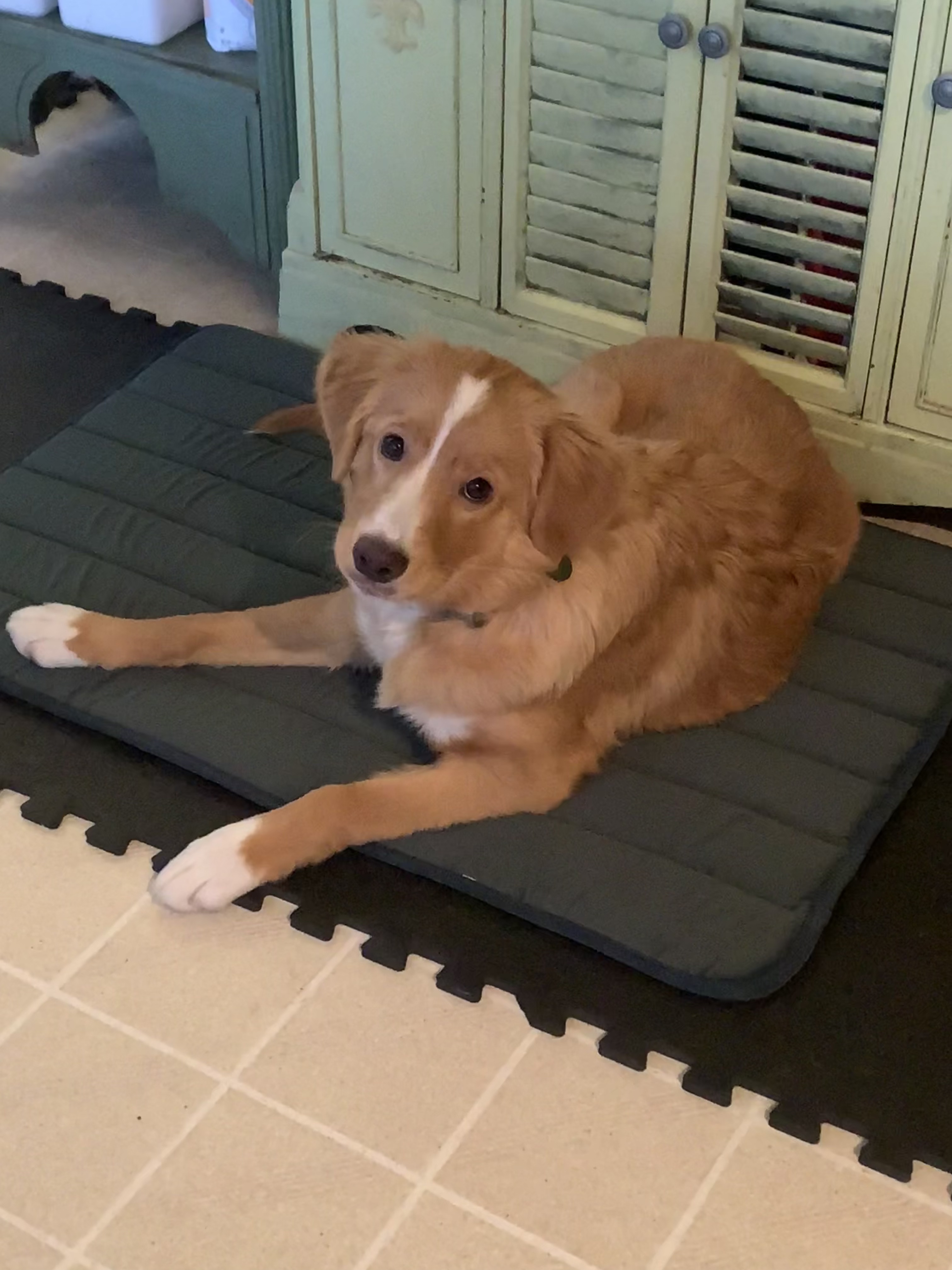
Waffles had a great training week — he went to school three times to practice his basic obedience skills, visited a library and the rehabilitation institute and practiced redirection and ignoring distractions. He successfully ignored loud distractions like fans, echoey stairwells and slamming doors, squealing children running down hallways, and lots of mobility devices like motorized wheelchairs, walkers, canes, and crutches. He also investigated a cleaning supply cart, library carts, different footing/flooring, elevators, stairs, second floor glass bannisters, and remained a calm boy through it all.
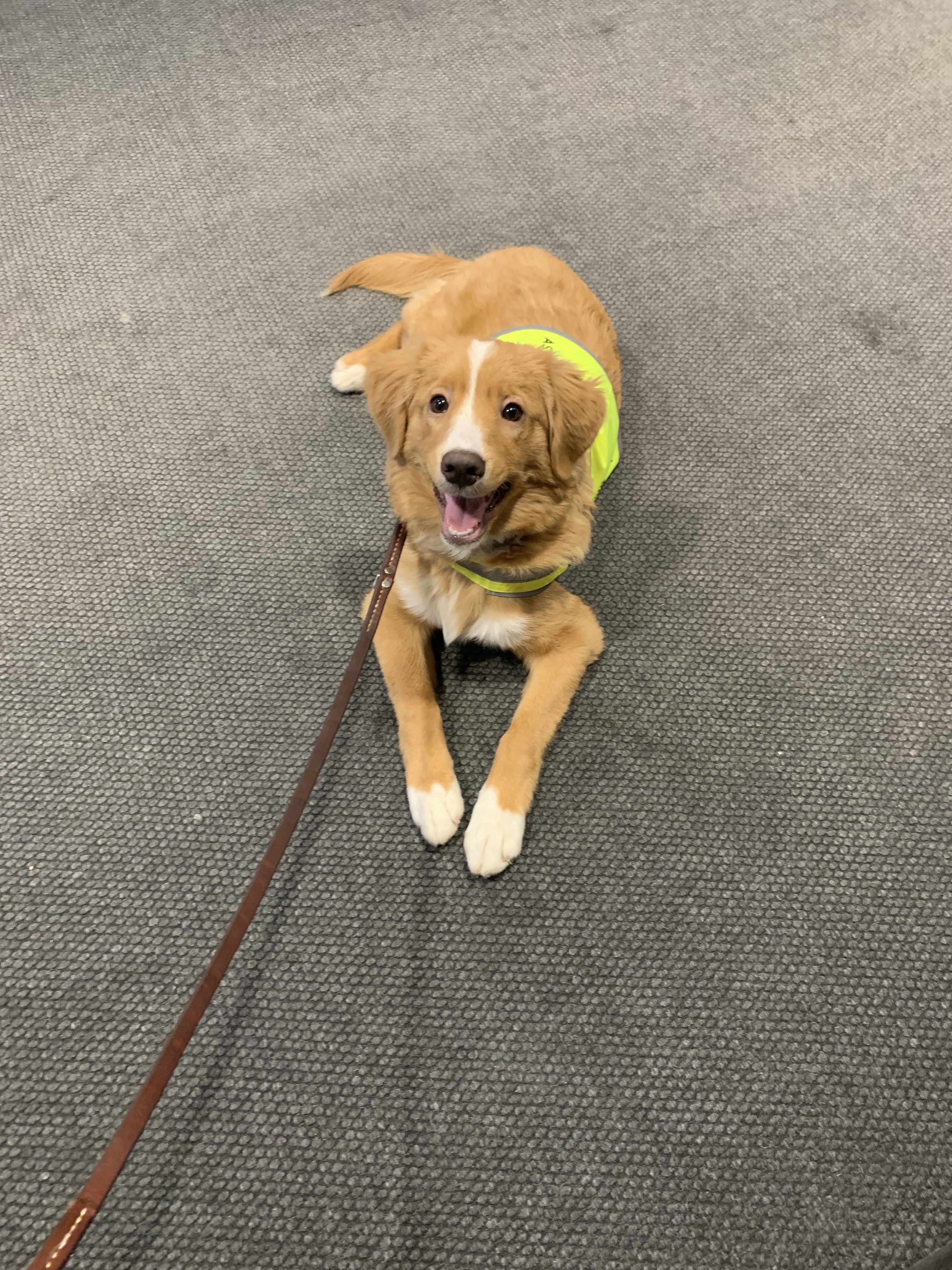
We also worked on umbrellas, vacuum cleaners, loud things that move, weird things that move, statues (lookin’ at you, St. Francis, at the Humane Society!) and he’s been doing very well. Waffles has a lovely, quick bounce-back response to things that he’s concerned about, and I’m very pleased that when he’s unsure about something, his first reflex is to look up at me for confirmation that he’s not going to get eaten alive. Then, he actually goes to explore. I’ll be the first to admit that I talk a lot to my dogs when I’m training — some trainers hate that, others think it’s essential, lots of schools of thought here — but for us, it works. Sure, he has no idea what I’m babbling on about, but he does pick up on my tone. That tone says: “Yep, you heard/saw/felt a thing, but you’re totally fine. Go check it out. Carry on.”


A very funny Waffles example here is “Frank.” I’m often asked how in hell I get high prey drive dogs like retrievers and shepherds to ignore squirrels, rabbits, ducks, or other critters when they’re working. They never get the chance to chase when they’re leashed and vested, for one, but most importantly, they get desensitized through me making the wildlife boring and the chase not worth their while. So what about Frank? Frank is the squirrel that hangs out in our crabapple tree out front. He (and/or his many body doubles) is reliably there, every day, every time I take Waffles out on leash to do his business. So when I see Frank move, I yell out “Hi, Frank!” Waffles sees him too and gets to look, but it’s so routine now that he just acknowledges that Frank ran by and goes on to do his thing. Frank just lives here. This summer, I’ll do the same with Breadbox (our resident wild bunny, so all bunnies), Bob (any and all birds), and Mr. Squeakers (chipmunks/field mice/whatever else that’s small and squeaky). It’s essentially LAT training (“Look At That”) where the dog is encouraged to look at the thing that triggers them (and kicks in their chase drive, barking, reactivity, etc.) and then rewarding them for disengaging and looking at their handler for confirmation that everything’s cool.
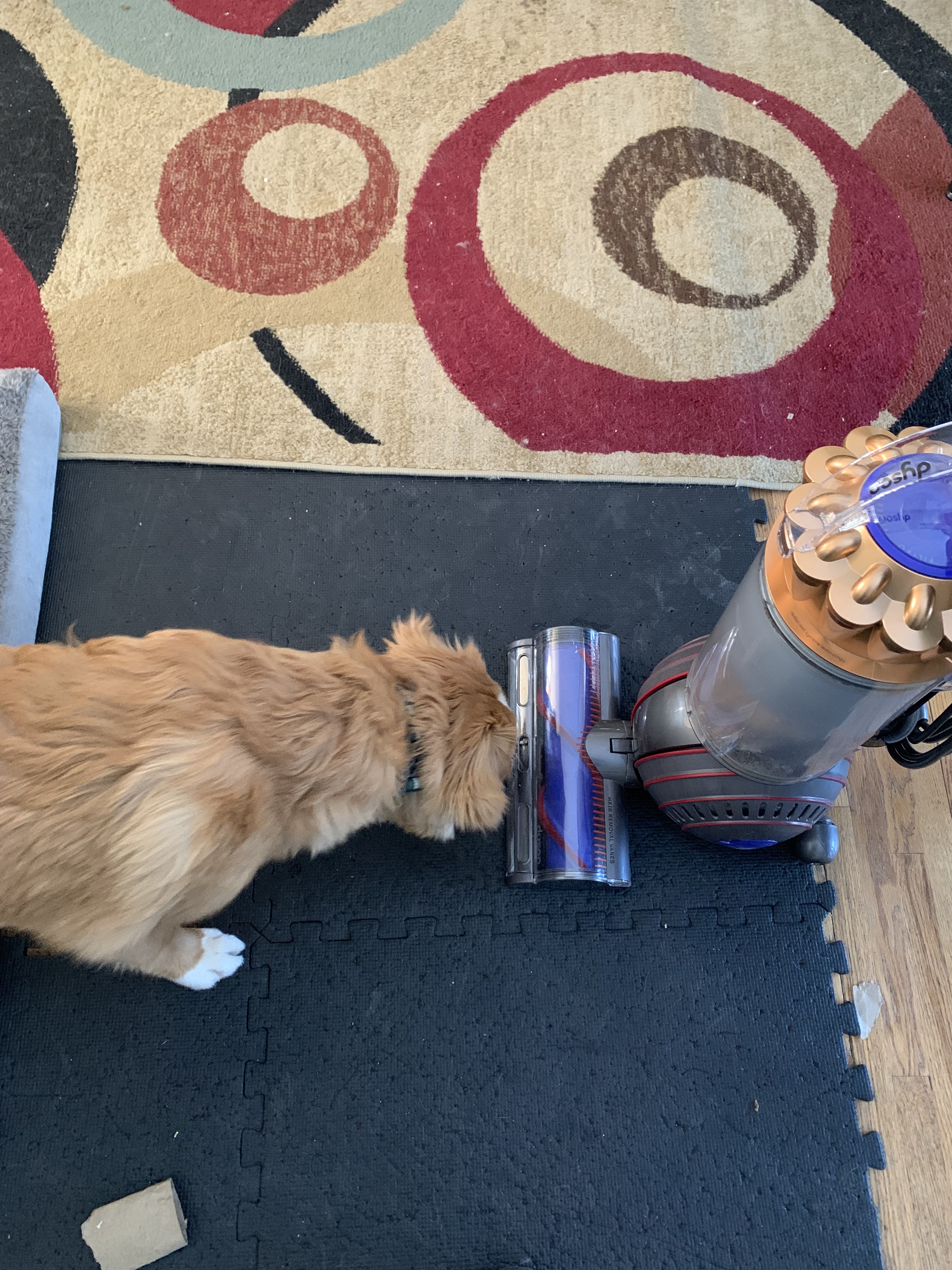
His major challenge at this point is his friendliness — he really wants to greet everyone and every dog he meets, but he does very well at controlling this urge when he knows he’s working on his work skills.
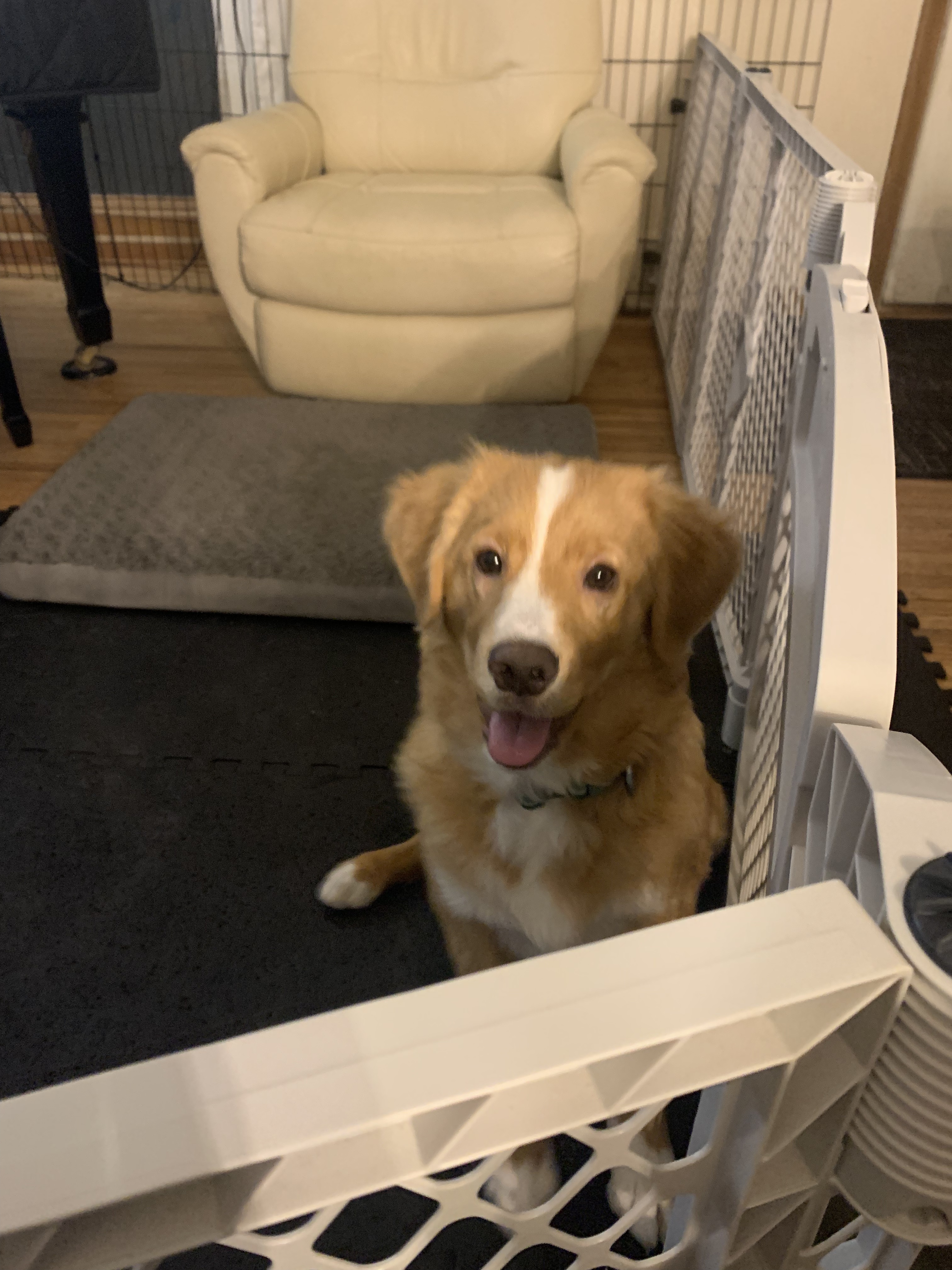
This week, we start working on switches and, now that he has lost all his baby teeth, paracord pulls. We’re also starting work on using a target stick, and we’re going to work on the Relaxation Protocol for the next 14 days to help improve his focus. Adolescence is hard!

A quick note of encouragement today to all puppy and adolescent dog owners out there — if you feel discouraged, tired, overwhelmed, and even sometimes downright tearful, it’s actually pretty normal. There IS such a thing as the Puppy Blues. You’ve waited for your new puppy forever, and you thought it’d be challenging but wonderful (and it is!) and you love your puppy, and you’re having fun most of the time, but some days are just HARD and you just want to flop down on the floor and cry because training is not going well today, your puppy is chewing on you, she’s destroyed something while you weren’t looking, she’s regressed after months of doing well, she’s defying your every command, she’s totally bonkers and a downright menace to society, and you start wondering about your life choices. You look around you at obedience school and wonder why your dog is the delinquent while everyone else is doing well. (This was us, last Wednesday. Waffles had big feelings about losing four teeth in one day, and his brain was just not in it.) You see an amazing puppy out in training — or worse, on social media in the hands of a pro trainer! — and wonder why THEY’RE doing great but your little Fido at home is being such an unholy terror. It’s super discouraging.
Know this: It’s normal. It’s okay. And all those other dogs have these bad days too. Heck, all trainers have bad days, no matter how experienced they are. The fatigue is real. Raising dogs is hard work, and it’s hard to see progress sometimes. I can’t tell you the number of times I’ve cheerfully told Waffles I was going to turn him into a pair of mittens this week. Or how our trainers laughed when I asked Waffles if his brain was pickled in testosterone. My most repeated sentences this week have been:
- “That’s not yours!”
- “Gentlemen don’t do that in public!” as he’s discovered humping.
- “I’m out!” as I take myself out of his space because he’s feeling chompy. Reverse time-outs for the win.
- “Try again!” in training because he’s blown me off but expects payment anyway.
- “Enough with the nonsense.”
- “You need a nap. Heck, I need you to take a nap.” when he’s overtired or over-wired and being a terror. Truth is, he actually usually DOES need a nap right about then.

Here’s my advice: Keep a log. Jot down the bad days. Jot down the good days. Track what your puppy is learning, the funny things they do, the stuff they’ve figured out, and the naughty things you think they should be incarcerated for. What you’ll notice over time is sawtooth progress. Game designers and developmental psychologists talk about this concept quite a bit. On a graph, it looks like this:

ADAMS, Ernest. Fundamentals of Game Design. NewRiders: 2009. p. 345
The slope, overall, is going up, as are the number of skills acquired. Everything is improving. But progress isn’t linear. I don’t like to think about it in terms of “steps forward and steps back” — I like to think about it as a steady progression up a mountain, with hills and valleys between where you started and the peak. Keep moving. Log the journey. Acknowledge the tough times and carry on with your goals in mind. You’ll get there, and your puppy will too. Remember to find the humor this developmental stage. The more relaxed you are through their adolescence, the easier of a time both of you will have. They feed off your feelings — like human adolescents do — and still need your good natured guidance. It won’t last forever. Hang in there.
 Keep Calm & Waffle On
Leave a comment